
What if your business roof was actually your most underutilised financial asset? For many enterprises across Devon, the volatility of the energy market is no longer a distant concern but a direct threat to 2026 profit margins, especially after the 30% rise in non-domestic electricity costs recorded since 2023. You're likely already looking for a way to cap these overheads by installing commercial solar panels while meeting the increasing pressure for transparent ESG reporting. It's a challenging balance to strike, but the technology has finally caught up with the ambition.
This guide explains how bespoke solar PV systems are transforming these liabilities into predictable, long-term yields for South West firms. We'll show you exactly how local businesses are achieving energy independence and securing a full return on investment in as little as five years. We will also navigate the technicalities of DNO grid capacity constraints and Exeter's specific conservation planning hurdles; ensuring your transition to renewable energy is as seamless as it is profitable. By the end of this guide, you'll have a clear roadmap for future-proofing your operations against the national grid's uncertainty.
Key Takeaways
- Understand why solar has transitioned from a sustainable choice to a financial necessity, with typical payback periods for Devon businesses now averaging just four to six years.
- Explore the technical requirements for scaling your energy independence, from 10kWp systems to bespoke installations of commercial solar panels exceeding 250kWp.
- Learn how to turn surplus energy into a consistent revenue stream by leveraging the Smart Export Guarantee and advanced SolarEdge inverter technology.
- Navigate the logistical essentials of a professional installation, including managing National Grid DNO applications and executing complex flat-roof projects with precision.
- Identify the long-term security benefits of partnering with a local, MCS-accredited expert who understands the specific energy landscape and climate of the South West.
The State of Commercial Solar Panels in Devon for 2026
Commercial solar panels have transitioned from a sustainability luxury to a core financial necessity for South West businesses. By January 2026, UK business electricity rates are projected to remain 45% higher than 2021 levels, creating a challenging environment for energy-intensive sectors. This volatility has turned the focus toward self-generation as a means of securing long-term price stability. Devon is uniquely positioned to lead this shift. The county receives approximately 1,050 kWh of solar irradiance per square metre annually, which is 15% higher than the UK average. This geographical advantage ensures that commercial solar panels installed in the South West deliver a significantly faster return on investment than those in northern territories.
Lumos Solar provides the technical expertise required to harness this natural resource. We support businesses across the region, from the industrial hubs of Plymouth to the commercial centres of Taunton. To understand the technical foundations of these installations, you can explore How Solar PV Systems Work to see how modern cells convert Devon's sunlight into reliable AC power. Our consultative approach ensures that every system is bespoke, designed to match the specific load profile of your operations while meeting the rigorous MCS accreditation standards.
Why Exeter Businesses are Switching to Solar PV
The 2026 energy price cap adjustments have placed immense pressure on SMEs and industrial units in Matford and Marsh Barton. Fixed-term contracts no longer provide the protection they once did, leading many firms to seek energy independence. By generating power on-site, Exeter businesses are effectively locking in electricity costs at roughly 5p to 7p per unit for the 25-year lifespan of the system. Additionally, 68% of local B2B procurement processes now require evidence of carbon reduction, making solar a vital component of corporate social responsibility (CSR) for local stakeholders.
Future-Proofing Your Operations with Smart Integration
A modern energy strategy requires more than just panels. In 2026, we're seeing 80% of our new commercial projects integrate smart technology to maximise efficiency. This includes pairing commercial solar panels with Zappi EV charging points to power company fleets with 100% renewable energy. For businesses looking to extend this renewable energy strategy beyond the workplace, our guide to ev charger installation in Exeter and Devon explains how smart-enabled charging hardware integrates with solar generation to slash driving costs across the South West. For companies with traditional vehicle fleets, managing fuel costs is another critical area for savings, often addressed with tools such as business fuel cards UK. The role of commercial battery storage, particularly high-capacity Fox ESS or Tesla Powerwall systems, has also become central to managing peak demand. These storage solutions allow you to bridge the gap between generation and consumption, ensuring your business remains operational and cost-effective even during grid outages or high-tariff periods. Our modular designs allow your system to scale seamlessly as your business grows.
How Commercial Solar PV Systems Work: A Technical Deep-Dive
Commercial solar panels transform daylight into a predictable financial asset by converting photons into usable electricity. While a typical residential setup might sit around 4kWp, commercial-scale installations range from 10kWp for small offices to upwards of 250kWp for large industrial warehouses. Photovoltaic (PV) technology in a commercial setting refers to the solid-state conversion of solar radiation into direct current electricity using semi-conductor layers within a high-capacity array.
We don't rely on guesswork when sizing these systems. Our engineers analyse 17,520 distinct data points from your annual half-hourly (HH) meter readings to ensure the array size perfectly offsets your peak operational demand. This precision prevents over-sizing, which can dilute your return on investment, or under-sizing, which leaves you vulnerable to volatile grid prices. You can request a technical site audit to see how your specific load profile dictates system scale.
High-Efficiency Solar Modules for the South West Climate
In Devon and Somerset, coastal locations like Exmouth and Weymouth require hardware that can withstand harsh environments. We specify modules with IEC 61701 certification for salt mist corrosion resistance to ensure 25-year durability. Efficiency ratings are equally vital; a premium 22.8% efficient N-Type module generates significantly more energy per square metre than a standard 19% alternative, which is crucial when roof space is limited. High-performance modules maintain better yields during the overcast days common in the South West, ensuring your 100kWp system delivers consistent results year-round.
Inverters and Power Optimisers: The Brains of the System
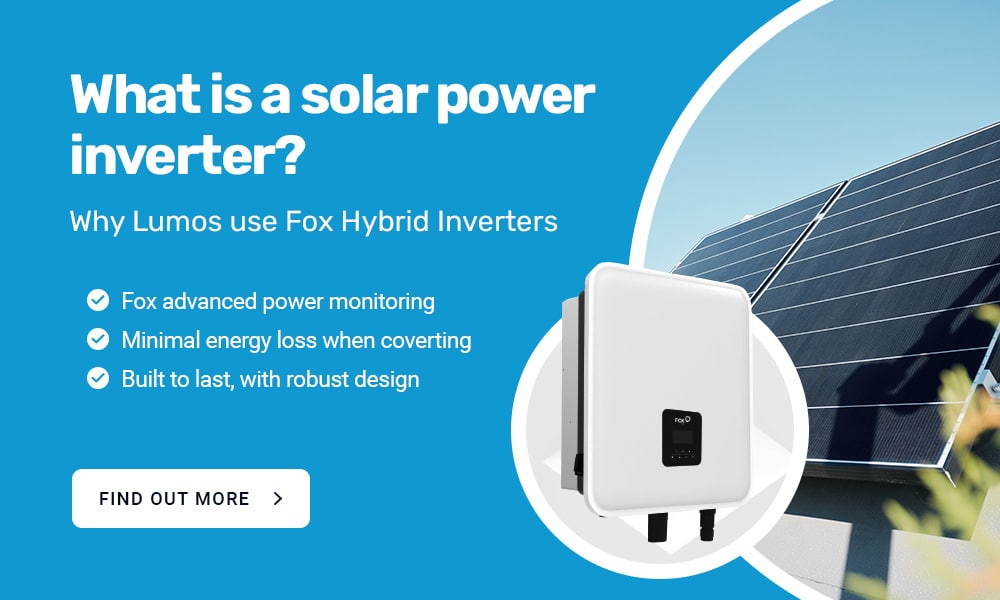
The inverter is the most critical component of your commercial solar panels installation. While traditional string inverters are common, we often recommend SolarEdge technology for complex commercial roofs. Traditional systems are limited by their weakest performing panel; if one module is shaded by a chimney or vent, the entire string's output drops. Power optimisers fix this by allowing each panel to operate independently, often increasing total energy yield by 2% to 10%. For a comprehensive comparison of the latest string, microinverter, and power optimiser technologies available in 2026, our solar inverter guide for Devon homes and businesses explains how to select the right technology for your specific roof configuration and grid connection requirements.
Safety is a non-negotiable priority for any business asset. Modern intelligent inverters include rapid shutdown features that reduce DC voltage to safe levels within 30 seconds of a grid failure or manual stop. This aligns with the latest UK Planning Rules for Solar Panels and fire safety protocols, protecting both your staff and the building's structural integrity. Through integrated monitoring software, you can track this performance in real-time down to the individual module, ensuring any technical faults are identified and resolved before they impact your bottom line.
Calculating ROI: Payback and Savings for Devon Businesses
Investing in commercial solar panels has evolved from a long-term sustainability goal into a high-performance financial strategy. By 2026, most Devon businesses see a full return on investment (ROI) within 4 to 6 years. This rapid payback period is driven by the widening gap between volatile grid prices and the falling cost of high-efficiency PV modules. Over a 25-year system lifespan, maintenance costs usually average less than 1% of the initial capital outlay. These minimal costs are dwarfed by the cumulative energy savings, which often exceed the original installation price five times over. For businesses looking to understand the complete financial picture, our detailed breakdown of solar panel cost in Exeter and Devon for 2026 provides transparent pricing for commercial installations across the South West.
The UK government's 'Full Expensing' scheme remains a critical lever for local firms. This tax incentive allows companies to deduct 100% of the cost of solar installations from their taxable profits in the year of purchase. For a business paying the 25% corporation tax rate, this effectively reduces the net cost of the project by 25p for every £1 spent. It's a powerful mechanism that turns a capital-intensive project into an immediate tax efficiency. For businesses where upfront capital expenditure remains a barrier, power purchase contracts for Devon businesses offer an alternative route to renewable energy with zero capital outlay, allowing you to benefit from fixed electricity rates from day one.
The 'Devon Advantage' in Solar Yield
Devon enjoys some of the highest solar irradiance levels in the UK. While the national average yield often sits around 850 kWh per kWp, local installations in Barnstaple and Bideford frequently achieve 1,020 kWh per kWp. Lumos Solar's recent 50kWp installation in North Devon recorded an annual production yield 18% higher than the UK average. The clear coastal air and southern latitude ensure that commercial solar panels in the South West perform at peak efficiency throughout the year.
Understanding the Smart Export Guarantee (SEG) in 2026
The Smart Export Guarantee provides a secondary revenue stream by paying businesses for the surplus energy they send back to the grid. In 2026, top-tier SEG tariffs from providers like Octopus Energy offer approximately 15p per kWh. However, onsite consumption remains the most profitable path. Businesses save roughly 28p per kWh by using their own power rather than purchasing from the grid. To maximise this, we integrate Fox battery storage systems to help firms reach a 'Self-Consumption' ratio of 85% or higher. For a detailed look at how pairing your panels with the right storage solution can eliminate evening grid dependency entirely, our guide to solar battery storage in Exeter and Devon covers the leading options including Tesla and Fox ESS systems.
- Direct Savings: £0.28 per kWh saved through self-generation.
- Export Revenue: £0.15 per kWh earned on surplus energy.
- Asset Protection: 25-year performance warranties ensure long-term security.
- Tax Efficiency: 100% first-year capital allowances under Full Expensing.
Our bespoke approach ensures that every system is sized to match your specific half-hourly settlement data. This precision prevents over-investment while ensuring your business captures every possible pound of sunshine.

Navigating Planning, DNO, and Flat-Roof Installations
Installing commercial solar panels involves more than just mounting hardware; it requires a methodical approach to compliance and engineering. At Lumos Solar, we guide Devon businesses through a rigorous 5-step process to ensure every project is future-proofed. This begins with a comprehensive site audit, followed by bespoke system design, DNO application management, MCS-accredited installation, and final commissioning. Our team handles the technical heavy lifting, ensuring your transition to renewable energy is efficient and transparent.
A pivotal part of this journey is the G99 application with National Grid, the Distribution Network Operator (DNO) for the South West. For systems exceeding 3.68kW per phase, formal permission is mandatory before any work begins. We've managed hundreds of these applications, a process that typically takes 45 to 65 days. By coordinating directly with National Grid, we ensure your infrastructure can handle the export capacity of a 50kWp or 100kWp array without compromising the local grid's stability.
Flat Roof Solar: Ballasted vs Penetrative Mounting
Commercial properties in coastal locations like Torquay and Teignmouth face unique challenges, specifically wind speeds that can exceed 100mph during winter storms. We protect your building's structural integrity by selecting the right mounting profile. Ballasted systems use weighted trays to secure panels at a 10-degree or 15-degree tilt without piercing the roof's waterproof membrane. This is crucial for preserving your 20-year roof warranty. For sites with lower weight-bearing capacity, we utilise penetrative mounts that fix directly to the building's steel frame, ensuring the system remains rock-solid in the face of Atlantic gales. For businesses with flat roof properties looking to explore their options in detail, our comprehensive guide to solar panels for flat roofs in Exeter and Devon covers everything from non-penetrative mounting systems to planning requirements for conservation areas.
Planning Permission in Devon's Conservation Areas
Most commercial solar panels fall under Permitted Development Rights as defined by the Town and Country Planning Order 2015. However, Exeter's historic centre and the South Devon AONB (Area of Outstanding Natural Beauty) often require a more nuanced approach. If your premises are Grade II listed or located in a conservation zone, a full planning application is usually necessary to address visual impact or glint and glare concerns. We've maintained a 95% first-time approval rate by providing local councils with detailed CAD drawings and heritage impact assessments, taking the administrative burden off your shoulders.
Choosing Lumos Solar: Your Local Commercial Energy Partner
Selecting a partner for commercial solar panels is a twenty-five-year commitment. National firms often prioritise volume over precision, frequently outsourcing labour to subcontractors who lack local accountability. Lumos Solar operates differently. Based in Exeter, our in-house engineers ensure every MCS-accredited system meets the rigorous standards required for long-term financial performance. We focus on durability; using Tier 1 components that withstand the unique coastal and rural conditions of the West Country.
Our commitment to quality is backed by practical results. By choosing a local specialist, you gain a partner who understands the specific planning nuances of Devon and Somerset. We don't just install hardware; we engineer assets that deliver measurable ROI. Our post-installation support includes comprehensive monitoring and maintenance packages, ensuring your system continues to perform at its peak efficiency for decades. For businesses considering their options, understanding how to choose the best solar power firms in Exeter and Devon is crucial for securing a long-term investment that delivers genuine value.
Our Regional Expertise: From Plymouth to Crediton
Our team possesses deep technical knowledge of the South West's electrical infrastructure. Whether you're operating a manufacturing plant in Plymouth or a distribution hub in Crediton, we understand the specific constraints of the National Grid in this region. This local presence allows us to provide rapid on-site support, ensuring your downtime is virtually non-existent. For businesses looking to maximise their self-consumption and protect against evening peak rates, we recommend exploring our Commercial Battery Storage guide to see how storage complements your generation.
- Rapid response times for maintenance and grid-related queries.
- Deep understanding of Western Power Distribution (WPD) grid connection requirements.
- Local references from businesses across Devon and Somerset.
Your Bespoke Transition to Renewable Energy
We reject high-pressure sales tactics in favour of a consultative partnership. Our process begins with a comprehensive energy audit and site survey, where we analyse your half-hourly settlement data to build a precise financial model. Most clients see a full return on investment within 5 to 8 years, with some agricultural installations achieving even faster payback depending on current energy usage patterns.
We provide clear, transparent projections based on your actual utility bills, not generic estimates. This level of detail ensures your board or management team can make a decision based on hard data. If you're ready to lower your overheads and secure your energy future with commercial solar panels, you can contact our Exeter office today to schedule your professional assessment. We'll help you transition to a cleaner, more profitable way of doing business.
Future-Proofing Your Devon Business with Sustainable Energy
Investing in commercial solar panels is no longer just an environmental choice; it's a strategic financial pillar for 2026. Devon businesses currently facing energy price volatility can secure fixed, low-cost power for the next 25 years while achieving average payback periods between 4 and 6 years. Success depends on navigating the technical landscape, from securing DNO grid permissions to implementing specialised South West flat roof solutions designed to withstand local coastal conditions.
As MCS Accredited Installers and Tesla Powerwall & SolarEdge Certified Partners, we ensure your transition to renewable energy is seamless and high-performing. We don't believe in generic packages. Instead, we focus on bespoke engineering that maximises your specific roof's potential and integrates perfectly with your operational demands. The shift toward a carbon-neutral economy is accelerating, and the infrastructure you build today will define your competitiveness for decades to come.
Request Your Bespoke Commercial Solar Audit
We look forward to helping your business lead the way in Devon's green energy revolution.
Frequently Asked Questions
Do commercial solar panels require planning permission in Devon?
Most installations of commercial solar panels in Devon fall under Permitted Development rights, so you won't usually need a full planning application. This applies as long as the system doesn't protrude more than 200mm from the roof surface. If your business is based in a Grade I or Grade II listed building or within the Dartmoor National Park, you'll need to consult your local planning authority for specific consent before work begins.
How long does a commercial solar installation take to complete?
The physical installation of commercial solar panels on-site typically takes between 5 and 15 working days depending on the system's scale. However, the entire journey from the initial structural survey to the final commissioning usually spans 8 to 12 weeks. This timeline includes the mandatory 45-day window for DNO grid connection approval and the procurement of bespoke mounting components tailored to your building's architecture.
What is the typical lifespan of a commercial solar PV system?
You can expect a modern commercial PV system to provide reliable renewable energy for 25 to 30 years. Most Tier 1 manufacturers offer a 25-year linear power warranty, which guarantees the panels will still produce at least 85% of their original output after two and a half decades. While the panels are incredibly durable, we recommend budget planning for an inverter replacement around year 12 to maintain peak conversion efficiency. Understanding your options in advance is straightforward with our 2026 solar inverter guide for Devon homes and businesses, which covers warranty comparisons and the latest high-efficiency models available in the South West.
Can I install solar panels on a commercial flat roof?
Yes, flat roofs are ideal for solar arrays using ballasted mounting systems that don't require roof penetrations. We typically set these panels at an angle of 10 to 15 degrees to maximise sunlight exposure while ensuring the wind doesn't lift the structure. This approach protects your roof's waterproof membrane and allows for a bespoke layout that works around existing plant equipment like air conditioning units or skylights.
What happens if my business produces more energy than it uses?
Excess electricity is either stored in on-site battery systems for evening use or exported back to the grid for a financial return. Under the Smart Export Guarantee (SEG), UK energy suppliers pay businesses for every kilowatt-hour of clean power they contribute to the network. Current export rates typically range from 5p to 15p per kWh, which helps shorten your payback period and turns your roof into a genuine revenue-generating asset. Businesses looking to maximise the value of that stored energy can find a comprehensive breakdown of the leading systems in our guide to solar battery storage for energy independence in Devon, which compares Tesla Powerwall and Fox ESS options in detail.
Are there any grants for commercial solar panels in the UK in 2026?
While direct national grants are rare, businesses in 2026 can utilise the Full Expensing tax relief to deduct 100% of the installation cost from taxable profits. Local schemes like the South West Net Zero Hub also provide periodic funding for energy efficiency audits and capital projects. These financial incentives can reduce the effective net cost of your system by up to 25%, making the transition to renewables more accessible for SMEs.
How do I apply for a DNO (G99) connection in the South West?
We handle the entire G99 application on your behalf by submitting technical data to National Grid Electricity Distribution, the network operator for Devon and Somerset. This application is essential for any system larger than 3.68kW per phase to ensure the local grid can safely manage your exported power. The process takes approximately 45 days to complete, and we won't start any work until we've secured formal approval from the network.
Does solar panel maintenance disrupt daily business operations?
Solar maintenance is entirely non-intrusive and won't require you to shut down your business or clear your workspace. Our technical teams perform annual inspections and professional cleaning from the roof, meaning your staff can continue their work without interruption. Because there are no moving parts in a PV system, the service is quick and quiet, focusing on electrical testing and ensuring the panels are free from debris to maintain maximum yield.
To ensure panels continue to generate maximum yield, they must be kept free from dirt and debris. While this is often part of a technical maintenance plan, many businesses also use professional cleaners for this task. As an example of a company offering comprehensive commercial cleaning, Sea Light Shine Ltd demonstrates the type of service that helps maintain valuable business assets, even though they are based in Ipswich.