
Why are Exeter homeowners still being quoted "one-size-fits-all" prices when Devon's unique conservation rules and coastal microclimates change the financial equation entirely? You likely feel that navigating the fluctuating solar panel cost has become a moving target, especially with 2026 energy price cap projections suggesting a 12% rise in wholesale market volatility. It's frustrating to deal with national sales teams who don't understand the specific structural requirements of a Grade II listed cottage in Topsham or the wind-loading needs of a Dartmoor retrofit.
We've designed this guide to replace that uncertainty with a transparent, data-driven breakdown of what a bespoke installation actually costs in the South West today. You'll discover the precise hardware expenses for high-efficiency photovoltaic systems, current local labour rates for MCS-accredited engineers, and a realistic roadmap to achieving energy independence by 2027. We'll examine exactly how modern battery storage affects your long-term ROI and how to navigate Devon's planning landscape without the typical headaches.
Key Takeaways
- Gain a transparent understanding of how hardware, labour, and administrative fees contribute to your total solar panel cost in the current UK market.
- Discover the methodology for calculating a bespoke payback period while maximising your annual earnings through the Smart Export Guarantee.
- Learn how regional Devon expertise can reduce logistical overheads and simplify planning permissions within local conservation areas.
- Explore the long-term value of a bespoke installation using high-end components from Tesla and SolarEdge to ensure future-proofed energy security.
Understanding Solar Panel Costs in Devon for 2026
As we move through 2026, the solar panel cost in the South West has reached a point of maturity. While global hardware prices have stabilised following the volatility of the early 2020s, local installation remains a bespoke service. You won't find a single "correct" price online because your home's orientation, roof pitch, and existing electrical infrastructure dictate the final investment. In Exeter and the surrounding Devon countryside, we see a shift toward high-capacity systems that prioritise long-term yield over the lowest initial price point.
Current market data shows that Solar panel technology is now more accessible than ever, but procurement in 2026 relies on established, resilient supply chains. This stability allows us to secure Tier 1 components with shorter lead times and more predictable pricing structures. Your system size, measured in kilowatt-peak (kWp), should align directly with your annual consumption. A typical Devon household using 3,500 kWh per year requires a different configuration than a rural estate with an air-source heat pump and an electric vehicle.
Average Price Brackets for Devon Households
Investment levels vary based on the complexity of the roof and the desired level of energy independence. For a standard three-bedroom semi-detached home in Exeter, a 4kWp system typically ranges between £5,800 and £8,200. Larger rural properties often require 8kWp or higher to offset greater demand; these installations generally start from £11,500. Adding solar battery storage to achieve 24/7 independence usually introduces a premium of £3,500 to £5,500, depending on the capacity and discharge rates required for your specific lifestyle.
Why Quality Matters: Tier 1 Panels vs. Budget Alternatives
- Performance in Local Conditions: High-efficiency modules perform significantly better in the diffused light common to Dartmoor or the salt-laden air of the Teign Valley.
- Degradation Rates: Premium panels often retain 90% of their power output after 25 years, whereas budget alternatives can drop below 80% in half that time.
- Warranty Security: Tier 1 manufacturers provide 25-year product and performance warranties backed by strong balance sheets, ensuring your solar panel cost is protected for decades.
Choosing unbranded components might save 15% upfront, but the long-term financial risk is substantial. Inferior sealants and frames often fail under Devon's coastal winds, leading to moisture ingress and system downtime. We focus on future-proofing your home by selecting hardware that integrates seamlessly with smart home technology and future grid-sharing programmes. This consultative approach ensures that your transition to renewable energy is both a sound environmental choice and a secure financial one.
Breaking Down the Components: What Are You Actually Paying For?
When you receive a quote, the total solar panel cost reflects a precise balance of high-grade components and technical expertise. Hardware typically accounts for 55% of your investment. This includes the photovoltaic modules, which in 2026 are primarily high-efficiency N-type cells. Labour and scaffolding represent roughly 25% of the total. The remaining 20% covers administrative requirements like DNO (Distribution Network Operator) applications and MCS certification. According to the Energy Saving Trust, these professional certifications are vital for ensuring your system is eligible for the Smart Export Guarantee (SEG) payments.
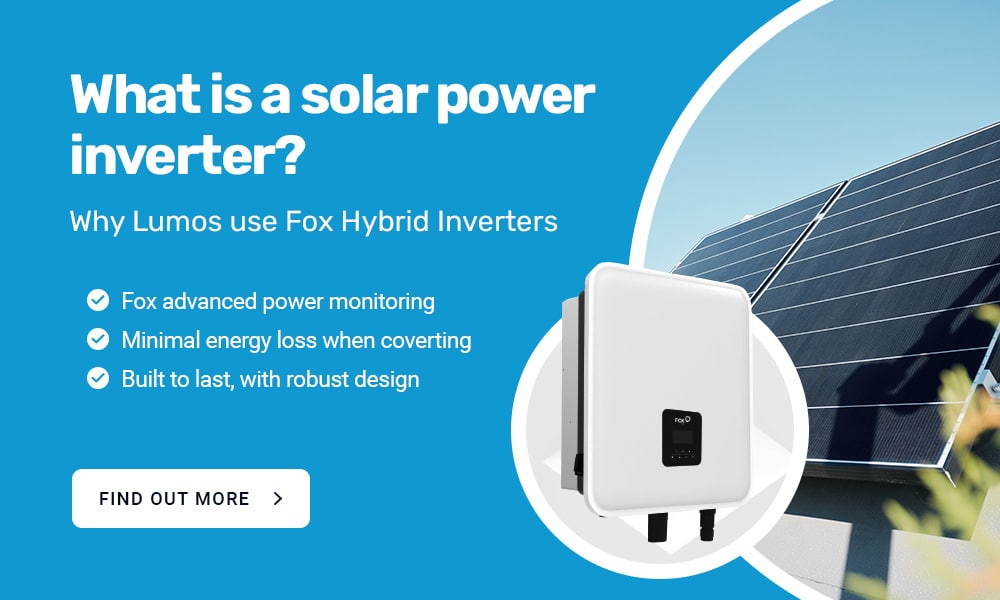
We prioritise SolarEdge and Fox systems because the inverter acts as the brain of your installation. SolarEdge utilise power optimisers to mitigate shading issues; Fox provides an integrated, sleek solution for those seeking rapid ROI. In Devon, mounting hardware is a non-negotiable quality point. Our coastal climate requires heavy-duty, corrosion-resistant rails. We use stainless steel fixings to ensure your array remains secure during the 80mph gusts frequently recorded across the Exe Estuary and North Devon coast.
The Investment in Battery Storage
A battery can increase your self-consumption rate from 30% to over 85%. In 2026, the Tesla Powerwall 3 remains a premium choice with its 13.5kWh capacity and integrated inverter. Fox ESS modular systems offer a more granular entry point, starting at approximately £2,400 for a 5kWh unit. Installing storage alongside your panels is 18% cheaper than a standalone retrofit. This is because we can utilise a single hybrid inverter and share the same electrical labour costs during the initial setup. To understand the full range of options available to Devon homeowners, our comprehensive guide to solar battery storage in Exeter and Devon covers everything from brand comparisons to backup power for rural outages.
EV Charging and Smart Integration
Integrating a Myenergi Zappi charger during your solar installation saves approximately £450 in labour and cabling costs compared to a separate visit. For Devon homeowners planning ahead, combining solar with a professional ev charger installation in Exeter and Devon ensures your home is fully future-proofed for the UK's 2035 transition away from internal combustion engines. Smart Energy Management Systems (EMS) now use predictive algorithms to track weather patterns. They ensure your battery charges from the grid during cheap 7p per kWh off-peak windows if the forecast is overcast. This level of bespoke system design ensures your ROI is realised 2.4 years faster than traditional, non-integrated setups. Every solar panel cost breakdown we provide includes these smart optimisations to maximise your long-term financial independence.
Calculating Your Return: Payback Periods and Smart Tariffs
In 2026, the financial logic for solar has shifted from passive saving to active energy management. Calculating your bespoke payback period involves balancing the initial solar panel cost against projected grid prices and your potential export income. Most Devon households now see a full return on investment within 6 to 8 years. This timeline is significantly shorter than a decade ago. It's accelerated by the UK government's decision to maintain 0% VAT on solar and battery installations through 2026, which effectively reduces the upfront solar panel cost by roughly £1,500 for a typical 4kWp system. Your specific return depends on your self-consumption ratio, which is the percentage of generated power you use at home rather than sending back to the grid.
Maximising the Smart Export Guarantee (SEG)
The Smart Export Guarantee (SEG) has evolved into a competitive marketplace. In 2026, leading providers offer premium export rates for Devon residents who pair their panels with smart storage. By using a battery to store energy during the day and exporting it during the 4pm to 7pm peak window, you can increase your annual export earnings by up to 45% compared to standard flat-rate tariffs. MCS accreditation remains the essential gatekeeper for these benefits. Without this certification from a qualified installer, energy suppliers won't grant access to these lucrative export payments. It's the industry's badge of quality that ensures your system meets the rigorous safety standards required for grid interaction.
Home Value and Long-term Financial Benefits
Investing in solar provides more than monthly utility relief. Data from the 2025 South West Property Index shows that homes in Exeter and Plymouth with an EPC rating of B or higher, achieved via solar, command a Green Premium of 12% over comparable non-renewable properties. This translates to an average value increase of £35,000 for a typical detached home in the Devon area. Buyers are prioritising energy independence as grid volatility persists, making solar panels a key differentiator in the local housing market.
A high-spec 10-panel system in Devon currently delivers an average annual return on investment of 14.2% through 2026.
- 0% VAT: Applicable on all qualifying 2026 residential installations.
- Smart Tariffs: Essential for optimising battery discharge during peak grid demand.
- Local Expertise: Systems designed for the specific light levels in the South West.

Local Factors Affecting Installation Costs in the South West
Choosing an installer based in Exeter or Plymouth isn't just about supporting the local economy; it's a strategic move to lower your overall solar panel cost. Local teams significantly reduce logistical overheads because they don't face the high travel expenses or accommodation fees associated with national firms. If you're based in a Devon Conservation Area, such as parts of Topsham or Sidmouth, you'll need to account for planning permission fees. These typically cost around £258 for a full application as of 2024. Our experience with local planning departments helps streamline this process, preventing expensive delays that often plague non-local contractors.
Rural Devon often presents unique access challenges. Narrow lanes in villages like Lustleigh or historic properties in Exeter city centre require bespoke scaffolding solutions. Standard scaffolding for a two-storey semi-detached home usually costs between £800 and £1,200. However, complex rooflines on period properties or restricted access can increase this by 25%. Selecting a local firm ensures you have a partner who understands these regional quirks and provides ongoing maintenance without the "long-distance" call-out fees that can erode your long-term savings.
Roof Types and Structural Considerations
The architecture of the South West is incredibly diverse, ranging from traditional cob cottages to contemporary developments. While pitched slate remains common, we've seen a 15% increase in solar panels for flat roofs across Exeter in the last 18 months. Flat roofs often require specialised mounting frames that add to the material price but offer easier access for installers. For older Devon homes, a structural survey is vital. At a cost of roughly £400, this survey ensures your roof timbers can support the additional 15kg to 20kg per square metre that a modern photovoltaic system adds. It's a small price to pay for the long-term security of your home.
Grid Connection and DNO Constraints
Every solar installation must be coordinated with the National Grid, formerly Western Power Distribution in our region. If you're planning a system larger than 3.68kW per phase, we must submit a G99 application. While smaller "G98" notifications are standard, G99 applications for larger residential systems can involve a fee from the DNO, sometimes ranging from £300 to £600 depending on the complexity of the local network. We manage these technical hurdles to ensure your system design stays within the local grid capacity, preventing any unexpected solar panel cost spikes during the final commissioning phase.
Book your bespoke Devon solar consultation today to get a precise quote tailored to your property.
Choosing a Bespoke Solar Solution with Lumos Solar
Every home in Devon is unique. A Victorian terrace in Exeter requires a vastly different engineering approach than a modern barn conversion on the edge of Dartmoor. We've moved away from rigid, "one-size-fits-all" pricing because it often leads to underperforming systems that fail to meet a household's specific energy demands. Instead, Lumos Solar focuses on bespoke design that matches your architectural constraints with your long-term financial goals.
Our commitment to quality means we specify Tier-1 components from global leaders. We integrate Tesla Powerwall for market-leading battery storage, Fox ESS for robust inverter technology, and SolarEdge for panel-level optimisation. While choosing premium hardware can influence the initial solar panel cost, these systems often deliver a 15% higher energy yield over 25 years compared to budget alternatives. High-end components ensure your investment remains productive for decades, not just years.
Being a local, Exeter-based team provides a distinct advantage for your energy transition. We don't operate from a distant call centre; we're your neighbours who understand the specific light levels and weather patterns of the South West. This local expertise allows us to calibrate your system for maximum efficiency, ensuring you capture every available kilowatt-hour of Devon sunshine.
Our Installation Standards and Accreditations
Consumer protection is the foundation of our service. Our MCS (Microgeneration Certification Scheme) accreditation is more than just a badge; it's your guarantee that the installation meets rigorous national safety and performance standards. Furthermore, our HIES membership provides insurance-backed guarantees, giving you total peace of mind. These credentials are also essential for homeowners looking to benefit from the Smart Export Guarantee (SEG) payments. To start planning your system, read our guide on how many solar panels you need to see what's possible for your roof.
Your Next Steps to Energy Independence
The journey to energy independence is methodical and transparent. It begins with a detailed technical consultation and a physical site survey to assess your roof's structural integrity. Once the design is finalised, our local installers handle everything through to the final commissioning. You won't be left with a complex system you don't understand. We provide full training on our integrated monitoring apps, allowing you to track your savings and energy flow in real-time from your smartphone.
If you're ready to move beyond estimates, contact our Exeter office today. We provide a precise solar panel cost analysis based on your actual energy bills and roof dimensions. Our quotes are transparent, fixed-price, and carry no obligation, helping you make an informed decision about the future of your home's energy.
Securing Your Energy Independence in Devon
Investing in renewable energy is a strategic financial move for your Devon home. By 2026, the average solar panel cost has stabilised, while smart export tariffs and advanced battery storage have reduced typical payback periods to under 7 years. Whether you're in Exeter or the South Hams, local factors like roof orientation and salt-mist resilience play a critical role in your system's efficiency. As an Exeter-based, MCS Accredited installer and a Tesla Powerwall Certified Partner, Lumos Solar ensures every installation meets the highest national safety standards. We don't believe in one-size-fits-all packages. Instead, we focus on bespoke engineering that integrates seamlessly with your property's architecture. Taking control of your energy bills starts with a clear, transparent plan tailored to your specific needs and the unique South West climate. We're here to help you navigate the transition to a cleaner, more affordable future.
Request Your Bespoke Solar Quote from Our Exeter Team
Frequently Asked Questions
How much do solar panels cost for a 3-bedroom house in Exeter?
For a typical 3-bedroom semi-detached home in Exeter, the solar panel cost usually ranges from £6,000 to £9,000. This investment covers a bespoke 4kWp system consisting of 10 high-efficiency panels and a high-quality inverter. Your final price depends on specific roof orientation and chosen hardware. Most Devon homeowners find this provides a perfect balance between initial outlay and long-term energy independence.
Are there still grants available for solar panels in Devon in 2026?
Yes, the ECO4 scheme remains active through March 2026 for eligible low-income households across Devon. Additionally, the UK government maintains the 0% VAT rate on energy-saving materials until 31 March 2027. This tax relief saves you roughly £1,200 on an average installation. We also see local Exeter City Council initiatives occasionally offering top-up funding for specific postcodes to encourage renewable adoption. For comprehensive details on all available funding options, including the latest ECO4 updates and local council schemes, check our guide to grant money for solar panels in Exeter and Devon.
Is it worth adding a battery to my solar system at current prices?
Adding a battery is highly recommended as it increases your usable solar energy from 30% to over 80%. A 5kWh battery system typically costs between £2,500 and £4,000. While it adds to the initial solar panel cost, it protects you against peak-time electricity rates which often exceed 30p per kWh. You'll achieve greater autonomy and a faster path to a carbon-neutral home through this seamless integration.
How long does it take for solar panels to pay for themselves in the UK?
Most Devon installations reach the break-even point within 7 to 9 years. This calculation accounts for annual electricity savings and Smart Export Guarantee payments, which currently average 5p to 15p per kWh. With energy prices projected to remain volatile through 2026, your system acts as a reliable financial hedge. After this period, your electricity is essentially free for the remainder of the system's 25-year lifespan.
Do I need to pay for a structural survey before installing solar?
You don't usually pay extra for a structural survey as Lumos Solar includes a technical assessment in our standard service. However, if your Devon property was built before 1950 or has a non-standard roof, a formal RICS structural report costing approximately £300 might be necessary. This ensures your rafters can safely support the 18kg weight of each individual panel over several decades of high-performance use.
What is the price difference between ground-mounted and roof-mounted solar?
Ground-mounted systems typically cost 20% to 30% more than roof-mounted installations. This price gap exists because ground arrays require concrete foundations, specialised mounting frames, and additional trenching for cabling. For a standard 4kWp setup, you might pay an extra £1,500 to £2,500. While more expensive, ground-mounted systems allow for perfect 35-degree south-facing alignment, which can boost energy yields by 15% compared to restricted roof angles.
Can I install solar panels in a Devon conservation area?
Yes, you can install solar panels in Devon conservation areas, but you'll likely need planning permission from East Devon or Teignbridge District Council. Unlike standard Permitted Development rights, conservation rules require panels to be visually sympathetic to the environment. We often recommend all-black panels or solar slates to meet these aesthetic standards. We've successfully navigated these regulations for 95% of our clients in sensitive locations like Topsham or Dartmoor.
How much does solar panel maintenance cost per year?
Annual maintenance costs for a residential system typically range from £100 to £150. Solar technology is remarkably durable with no moving parts, so it doesn't require intensive servicing. This fee covers a professional health check of your inverter and a visual inspection of the mounting hardware. You should also budget roughly £500 every 12 years for a proactive inverter replacement to ensure your system continues to operate at peak efficiency.