What if you could harness the full power of the sun without ever putting a single drill hole through your flat roof's waterproof membrane? It's a question that keeps many property owners awake, especially when considering the structural demands of renewable energy. You likely feel that the dual goals of generating clean electricity and maintaining a bone-dry interior are often at odds. We understand that anxiety, particularly when you're weighing the risk of high coastal winds against the desire for long-term financial independence and environmental sustainability.
The good news is that flat roof solar panel mounting systems UK have reached a peak of engineering excellence in 2026. This expert guide will help you discover the most secure, efficient, and roof-safe mounting solutions available for your project. We'll walk you through the critical choice between aerodynamic ballasted systems and mechanical fixings, explaining how to achieve a leak-proof installation that maximizes your energy yield despite the flat surface. From understanding structural load limits to navigating the latest permitted development rules, you'll gain the clarity needed to transform your roof into a high-performing power station with total confidence.
Key Takeaways
- Discover why specialized A-frames and tubs at 10-15 degree tilts provide the optimal balance between energy generation and wind resistance for flat surfaces.
- Compare ballasted and mechanical flat roof solar panel mounting systems UK to find the most secure, non-invasive solution that preserves your roof's warranty.
- Learn how to mitigate the "Parapet Effect" and manage structural weight to ensure your installation remains stable during high coastal winds.
- Navigate the 2026 planning landscape by identifying the specific height restrictions and Permitted Development rights that apply to flat roof arrays.
- Understand how bespoke structural calculations and MCS-certified hardware guarantee a leak-proof, high-performing transition to solar energy.
Understanding Flat Roof Solar Mounting: Why It Differs from Pitched Roofs
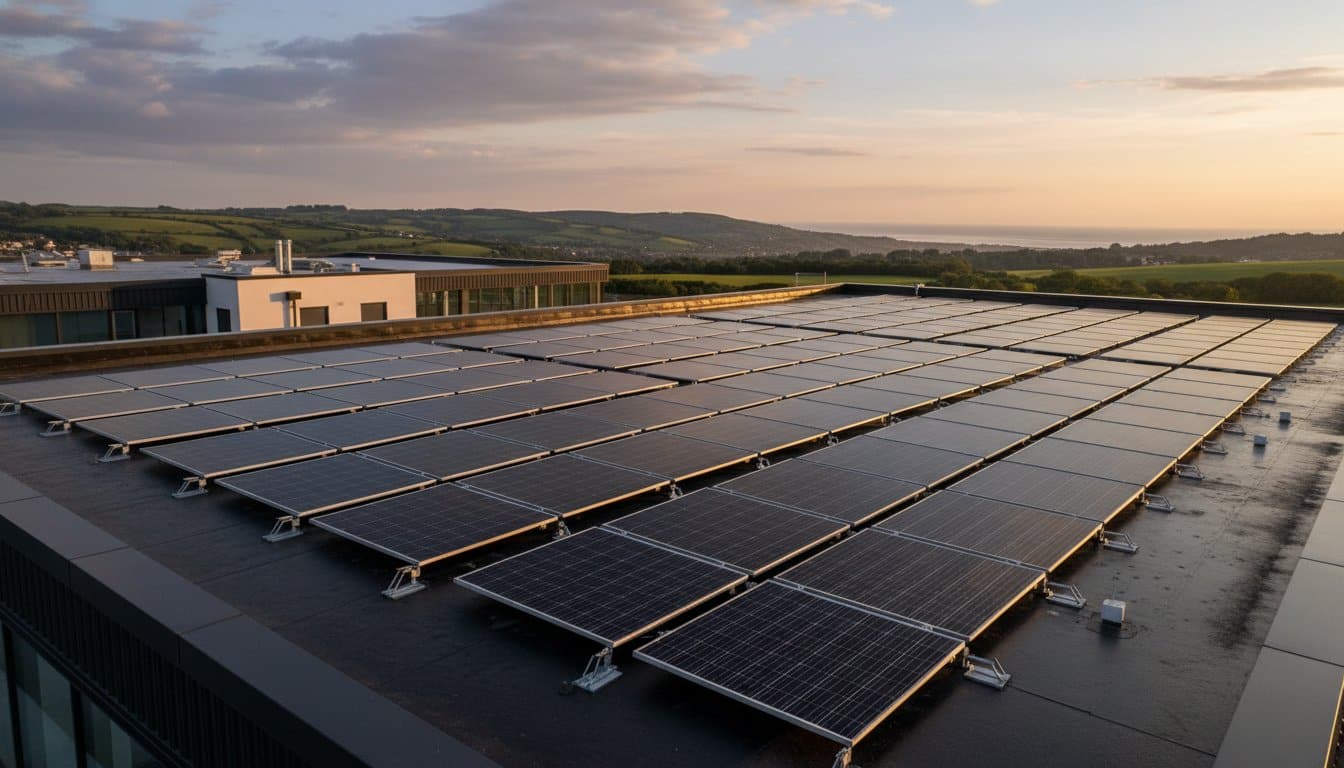
Installing solar on a flat surface requires a departure from the traditional methods used on pitched roofs. On a standard slanted roof, the building's existing structure dictates the angle of the panels. With a flat surface, we must create that geometry ourselves. Modern flat roof solar panel mounting systems UK utilize specialized hardware like A-frames or weighted "tubs" to provide the necessary tilt for efficient energy collection. These systems are designed to be freestanding or minimally invasive, ensuring the structural integrity of your property remains the top priority.
While 35 degrees is often cited as the UK's optimal angle for maximum annual yield, flat roof installations typically favor a lower tilt of 10 to 15 degrees. This design choice is a calculated response to wind loading. A steeper angle acts like a sail, significantly increasing the uplift forces during storms. By opting for a lower profile, we maintain the self-cleaning properties of the panels while keeping the system aerodynamically stable. This lower tilt also allows for tighter row spacing. Because panels at a 15 degree tilt cast shorter shadows, we can fit more modules onto a restricted roof area without the risk of "self-shading" degrading your total output.
The Science of Tilt and Orientation
Choosing the right configuration is about balancing peak power with consistency. A South-facing array provides the highest midday surge, but East-West "Wave" setups are increasingly popular for maximizing roof coverage. These configurations generate power earlier in the morning and later in the afternoon, which aligns perfectly with the charging cycles of solar battery storage systems. By smoothing out the energy curve, you reduce reliance on the grid during expensive peak hours. Most sophisticated Photovoltaic mounting systems now offer modular components to support both layouts, ensuring your system is future-proofed against changing energy needs.
Protecting the Roof Membrane
Maintaining the integrity of your roof is a primary technical objective. We place protective separation layers, such as high-grade EPDM or fleece mats, between the mounting feet and the roof surface to prevent chemical migration and physical wear. This is particularly vital for "warm roofs" where the insulation sits directly beneath the membrane, as excessive pressure can cause compression. We also ensure that the mounting layout preserves natural drainage paths. Blocking water flow leads to "ponding," which can accelerate membrane degradation and potentially void your manufacturer’s warranty. Whether your roof is felt, EPDM, or fiberglass, the mounting strategy must be tailored to the specific material to ensure long-term security.
Ballasted vs. Attached Systems: Choosing the Right Framework
Choosing the ideal framework for your installation isn't just a matter of preference. It's a technical decision based on the structural DNA of your building. When evaluating flat roof solar panel mounting systems UK, the primary debate centers on whether to use weight to hold the panels down or mechanical fixings to secure them to the structure. Each approach has distinct advantages depending on your roof's material, its age, and the local wind conditions. This detailed assessment ensures that your choice of flat roof solar panel mounting systems UK provides long-term security against the elements.
The Pros and Cons of Ballasted Mounting
Ballasted systems are a popular choice because they don't require any holes to be drilled into your roof membrane. By using heavy weights, such as concrete slabs or gravel tubs, the system stays firmly in place through gravity alone. This approach is excellent for preserving the manufacturer's warranty on materials like EPDM or fiberglass. However, the trade-off is the significant increase in "dead load." A ballasted array can add between 12 and 25 kg/m² to your roof's surface. This makes them best suited for concrete decks or modern commercial units designed with high load-bearing capacities. If your roof structure is older or less robust, the sheer weight required to counter wind lift might exceed its safe limits.
When to Use Mechanical or Fixed Mounts
Mechanical attachments involve bolting the mounting hardware directly into the building's structural rafters or deck. While this sounds invasive, it's often the only viable solution for timber-framed extensions or properties in exposed coastal locations where wind speeds are extreme. We ensure these systems remain leak-proof by using "target patches" or "mushrooms." These are specialized flashing components made from the same material as your roof, which are heat-welded or bonded over the fixing point to create a permanent, watertight seal. Fixed mounts are considerably lighter than ballasted ones, making them ideal for roofs with low load capacity. It's vital to match the fixing material to your existing roof surface to prevent chemical reactions or premature wear.
Hybrid solutions offer a middle ground, combining a lighter amount of ballast with strategic structural tethers. This configuration is particularly effective for mid-range projects where you want to minimize penetrations without overloading the roof. Regardless of the framework you choose, a professional structural survey is non-negotiable. This report determines exactly how much weight your roof can handle and which fixing method provides the highest safety margin. Recent updates in the UK government's new planning rules have simplified the path to installation, but structural integrity remains the foundation of a successful project. If you're ready to see which framework fits your home or business, our experts can guide you through the best flat roof solar installations for your specific needs.

Key Considerations for the UK Climate: Wind, Weather, and Weight
Engineering a solar array for a flat surface in the UK requires a deep understanding of local environmental pressures. Wind load is the primary failure point for poorly installed flat roof solar panel mounting systems UK. While a pitched roof provides a natural shield, panels on a flat roof are often more exposed to the elements. This exposure creates a "sail effect," where high-velocity air can get underneath the modules and create significant uplift forces. Without precise aerodynamic planning, even heavy systems can shift or sustain damage during seasonal storms.
The "Parapet Effect" is a critical factor that many standard installers overlook. When wind hits the vertical face of a building, it creates intense turbulence at the roof edges. These vortexes can be much stronger than the wind speed in the center of the roof. To counter this, we design specific spacing and buffer zones around the perimeter. We also prioritize corrosion resistance for properties in the South West. For homes along the Devon and Cornwall coast, using Grade 304 or 316 stainless steel and high-grade aluminum is vital to prevent salt-air degradation, ensuring your investment lasts for decades rather than years.
Managing Wind Uplift in Devon and Cornwall
Aerodynamic stability is achieved through the use of wind deflectors or back plates. These components close the gap behind the tilted panels, preventing air from building up pressure underneath the modules. In high-exposure areas, the edge zones of the roof often require significantly more ballast or specialized mechanical tethers compared to the central array. Lumos Solar integrates high-resolution regional wind maps into every bespoke design to ensure your system remains secure during even the most severe South West storms. This methodical approach transforms a potential risk into a stable, high-performing energy asset.
Weight Management and Structural Integrity
Calculating the load on your roof involves more than just weighing the panels. We distinguish between "Dead Load," which is the static weight of the flat roof solar panel mounting systems UK and panels, and "Live Load," which accounts for temporary pressures like heavy snowfall or maintenance foot traffic. It's essential to distribute this weight evenly across the roof deck to prevent point loads that could cause the structure to deflect or bow over time. While modern commercial buildings are often robust, consulting with a structural engineer is mandatory whenever the calculated load nears the building's design limits. This ensures your transition to renewable energy never compromises the safety of your property's foundation.
Planning Permission and ROI for Flat Roof Solar in 2026
Navigating the legal landscape for flat roof solar panel mounting systems UK is simpler than it was a decade ago, yet specific technicalities remain. Most domestic installations fall under Permitted Development (PD), but the physical nature of flat roof mounts often tests these boundaries. Unlike pitched roof panels that sit flush, flat roof arrays require angled frames to capture the sun. While panels on a slanted roof are limited to a 200mm protrusion, current 2026 regulations allow flat roof panels to rise up to 0.6 meters from the roof surface. However, they must not sit higher than the highest part of the existing roof, excluding the chimney.
In historic areas like Exeter or Plymouth, the rules tighten significantly. If your property is a Listed Building or situated within a conservation area, PD rights are often restricted or removed entirely. For commercial properties, visibility from a highway can also trigger the need for a full planning application. Understanding these nuances is vital because they directly impact your solar panel cost. A project requiring planning permission involves additional fees and lead times, though the long-term ROI of a well-engineered system remains a powerful financial incentive for those seeking independence from volatile energy markets.
2026 Planning Checklist for Homeowners
- Verify protrusion: Confirm that your mounting frames don't lift the panels more than 0.6 meters from the flat roof plane.
- Check setbacks: Panels must be positioned at least 1 meter from the edge of the roof to qualify for Permitted Development.
- Confirm PD rights: Verify with your local council that your property hasn't had its Permitted Development rights removed via an Article 4 Direction.
Maximising ROI with Integrated Storage
Flat roofs offer a distinct advantage for maintenance and cleaning, making them ideal for large-scale commercial solar panels and domestic arrays alike. Because flat systems often use a lower tilt of 10 to 20 degrees, they generate a significant energy peak during the middle of the day. Pairing your installation with battery storage allows you to capture this surplus rather than exporting it for a lower rate. You'll benefit from the Smart Export Guarantee (SEG) for any excess you do sell back, but self-consumption is the fastest route to paying off your initial investment. If you're unsure if your project meets the 2026 criteria, contact our team for a professional assessment of your site's potential.
The Lumos Solar Approach: Precision Mounting for the South West
Choosing a solar power firm that understands the specific microclimates of Devon and Cornwall is the difference between a system that lasts and one that requires constant adjustment. Our approach to flat roof solar panel mounting systems UK is rooted in precision engineering and regional experience. We don't believe in one-size-fits-all kits. Instead, we use bespoke structural calculations for every project to ensure the mounting solution is perfectly tuned to your building's load-bearing capacity and wind exposure. This methodical planning provides the long-term security you need when investing in renewable energy.
We prioritize non-invasive ballasted systems whenever the roof structure allows. This commitment ensures your roof's waterproof membrane remains intact, protecting your property's integrity and value. By using MCS-certified mounting hardware, we provide a level of safety that meets the highest national standards. We also look ahead. We design our mounting layouts with future-proofing in mind, ensuring your infrastructure is ready for additional modules or hardware as your energy needs evolve. This forward-thinking strategy ensures your investment remains relevant for decades.
Bespoke Design for Every Flat Roof
Our expertise spans all flat roof types, from GRP garage roofs to expansive commercial EPDM surfaces. We exclusively use premium components from industry leaders like Van der Valk and Renusol, known for their exceptional durability in salt-heavy coastal air. We also consider the wider technological ecosystem of your property. If you're planning a future EV charger installation, we can integrate the necessary cable management and structural considerations into the initial solar mounting design. This joined-up approach saves time and reduces costs during future upgrades.
Your Journey to Energy Independence
Every project begins with a detailed site survey and 3D shade modelling. This technology allows us to visualize exactly how shadows will move across your flat roof throughout the year, ensuring optimal placement for every panel. For our South West clients, this data-driven approach is backed by long-term support and maintenance packages tailored to the local environment. We're here to ensure your transition to renewable energy is seamless, professional, and entirely stress-free. Book your flat roof solar consultation with Lumos Solar today to take the first step toward true energy independence.
Securing Your Energy Future with Expert Flat Roof Mounting
Selecting the right flat roof solar panel mounting systems UK is about more than just generating power. It's about protecting your property's structural integrity while securing long-term financial independence. You've discovered that the balance between aerodynamic ballast and structural tethers is the foundation of a leak-proof, high-yield installation. By prioritizing regional wind load data and future-proofed technology, you ensure your transition to renewable energy is both safe and highly profitable for decades to come.
As MCS Certified Installers and specialists in coastal wind load engineering, we deliver systems that withstand the unique environmental pressures of the South West. Our team is Tesla Powerwall and SolarEdge Certified, ensuring that your installation isn't just expertly mounted but also optimized for peak performance. We're dedicated to providing a transparent, professional service that puts your long-term security first, guiding you through every technical nuance with the calm confidence of local experts.
Take the next step toward a sustainable and self-sufficient future today.
Get a Custom Flat Roof Solar Quote for Your South West Property
Frequently Asked Questions
Do solar panels on a flat roof need planning permission?
Most domestic flat roof solar installations fall under permitted development and don't require a full planning application. Under 2026 guidelines, panels must not protrude more than 0.6 meters from the roof surface or be higher than the highest part of the roof. You must also keep the array at least 1 meter from the roof edge. Different rules apply to listed buildings or conservation areas, where professional guidance is essential to navigate local restrictions.
Will installing solar panels on my flat roof cause leaks?
A professionally installed system will not cause leaks. We prioritize ballasted flat roof solar panel mounting systems UK because they secure the array using weight rather than penetrating the waterproof membrane. If mechanical fixings are required for structural reasons, we use specialized heat-welded "target patches" to create a permanent, watertight seal. These methods ensure your roof remains bone-dry while providing long-term energy security and peace of mind.
How much ballast is needed for flat roof solar panels?
The amount of ballast depends on your building's height and local wind exposure. A typical ballasted system adds between 12 and 25 kg/m² to the roof surface. While a standard panel weighs about 20kg, the addition of concrete or gravel ballast can bring the total weight per panel to approximately 100kg. A structural survey is a mandatory step in our process to confirm your roof deck can safely support this load.
Can I install solar panels on a felt or bitumen flat roof?
You can absolutely install solar on felt or bitumen roofs. These surfaces are ideal for ballasted frames that rest on protective fleece or EPDM mats to prevent the weights from sinking into the bitumen during summer heat. Because drilling into older felt can be risky, non-invasive mounting is the preferred choice for these materials. This approach maintains the integrity of the existing surface while maximizing your energy yield.
What is the best angle for solar panels on a flat roof in the UK?
The best angle for flat roof installations in the UK is typically between 10 and 20 degrees. While 35 degrees is the mathematical peak for annual yield, lower angles are more practical for flat surfaces. This range reduces wind lift and prevents rows from casting long shadows on each other. It provides a sophisticated balance between high energy generation and aerodynamic stability in the South West's coastal climate.
How do you clean solar panels on a flat roof?
Cleaning panels on a flat roof is generally safer and easier than on pitched roofs due to the level walking surface. You should use deionized water and a soft-reach brush to remove salt spray or dust without scratching the glass. Because flat roof solar panel mounting systems UK sit at lower angles, they may accumulate debris slightly faster than steeper roofs. Regular maintenance ensures your system continues to capture maximum sunlight.
Are flat roof solar panels more expensive to install than pitched roof ones?
Flat roof installations typically carry a cost premium compared to pitched roof systems. This is due to the additional hardware required, such as specialized A-frames and heavy ballast weights, alongside the need for a structural engineer's sign-off. These specialized mounting solutions ensure your array is secure against high winds. While the initial investment is higher, the ease of maintenance and optimal orientation often lead to excellent long-term financial returns.
Can I put solar panels on a flat roof extension?
You can install solar panels on a flat roof extension, provided the structure is strong enough to bear the weight. Many modern extensions are designed with high load-bearing capacities that make them perfect for ballasted or hybrid systems. We recommend a structural assessment to determine if the timber or steel joists can handle the additional dead load. This is a brilliant way to turn unused space into a functional energy asset for your home.