
Why are homeowners across Exeter still paying record-high energy rates while the South West sun shines directly on their rooftops? By 2026, the average UK household faces a landscape where energy price volatility remains a constant concern, making the "free" power from your panels feel surprisingly expensive when the sun goes down. You likely invested in renewables to reclaim control over your monthly outgoings, yet you still find yourself tethered to the National Grid during peak evening hours. It's frustrating to watch your generated power vanish back into the network for a fraction of what you pay to buy it back.
This guide reveals how modern solar battery storage can bridge that gap, transforming your Devon property into a truly self-sufficient energy hub. We'll demystify the choice between premium brands like Tesla and Fox, explain how to secure backup power for rural outages, and show you how to maximize your carbon reductions. You'll discover a bespoke approach to future-proofing your home that ensures long-term financial and environmental security. Our expert insights provide the clarity you need to move from grid dependency to total energy independence with confidence and ease.
Key Takeaways
- Master the shift from grid reliance to total energy independence by understanding how to store and use your generated power locally.
- Compare the technical specifications of Tesla, Fox, and SolarEdge to identify the most efficient solar battery storage for your home’s unique footprint.
- Calculate the potential return on investment for your Devon property using updated 2026 data on energy bills and significantly shortened payback periods.
- Navigate the complexities of MCS standards and National Grid applications with expert guidance tailored specifically to the South West landscape.
What is Solar Battery Storage and Why is it Essential in 2026?
Solar battery storage acts as the vital bridge between energy generation and consumption. While photovoltaic panels capture the Devon sunshine, the battery ensures that power is available exactly when you need it, rather than just when the sun is shining. In 2026, the focus for Exeter homeowners has shifted from simply generating green energy to achieving total local self-sufficiency. This transition is driven by the widening gap between the cost of buying electricity and the low rates offered for exporting it back to the grid. It's no longer enough to be a passive generator; you must be an active manager of your own power.
For residents in rural Devon or along the exposed coastal stretches, these home energy storage systems provide a layer of reliability that the national grid often struggles to match during winter storms. Reliability is a major concern for those living on the outskirts of Exeter where overhead lines are vulnerable to high winds. With 2026 energy price caps projected to keep peak-time rates high, the financial logic for storage has never been more compelling. It allows you to bypass the most expensive hours of the day entirely, effectively locking in your energy costs for the next decade while protecting your home from external market volatility.
The Problem: Why Solar Panels Alone Aren’t Enough
Most Exeter households follow a predictable pattern. They use minimal power at midday when solar generation is at its peak and high amounts in the evening when the sun has set. This mismatch is often called the "duck curve." Without solar battery storage, a typical home might waste up to 70% of its generated energy by selling it back to the grid at a fraction of its true value. This mismatch creates a scenario where homeowners are forced to buy back their own lost energy at five times the price they sold it for earlier that day. Energy independence for Exeter households means capturing that 70% and using it to power evening appliances, electric vehicle charging, or heat pumps. By installing a storage solution, you reclaim control over your own production and stop relying on the expensive infrastructure of big energy suppliers.
The 2026 UK Energy Landscape
The UK government's Warm Homes Plan has accelerated the adoption of storage by providing clearer frameworks for domestic upgrades. Local Devon incentives often complement these national schemes, focusing on reducing carbon footprints in heritage areas and rural communities. Modern systems now integrate seamlessly with the Smart Export Guarantee (SEG), allowing you to automate when you sell power to maximize profits. This bespoke approach ensures your home isn't just a consumer, but an active participant in a smarter, more efficient grid. In 2026, the SEG landscape in the South West has evolved to favor those who use solar battery storage to export only during periods of peak national demand.
How Solar Battery Storage Works: A Deep Dive into the Technology
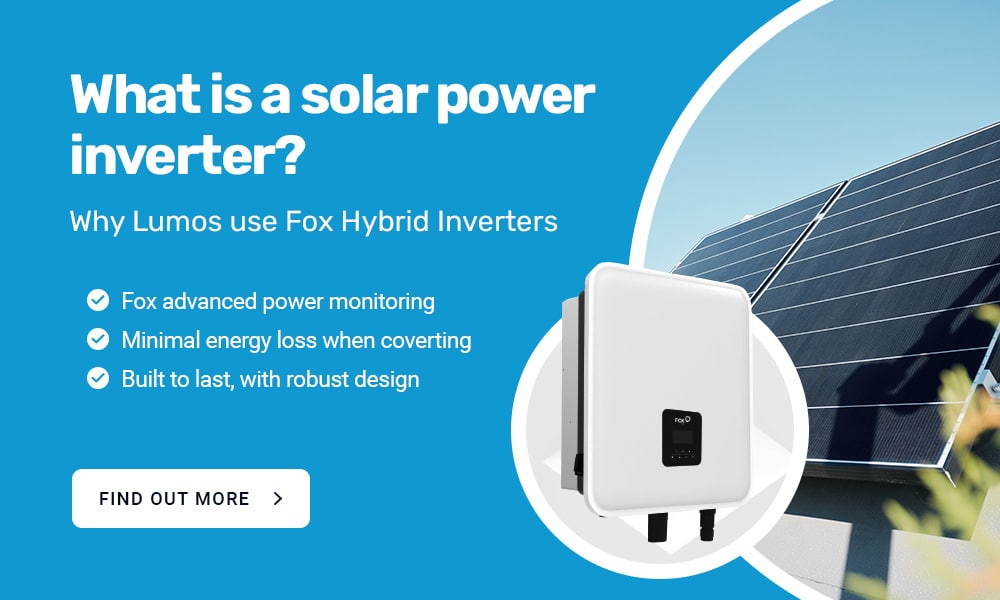
Understanding the mechanics of energy capture is the first step toward true independence. Your photovoltaic (PV) panels absorb Devon sunlight and generate direct current (DC) electricity. In a standard setup without a battery, this power must be used instantly or sent back to the National Grid. Integrating solar battery storage changes this dynamic by acting as a reservoir. An inverter, such as those from SolarEdge or Fox, manages this flow. It converts DC into the alternating current (AC) your appliances require, while simultaneously ensuring any excess energy is diverted into the battery cells for later use.
Safety and durability are paramount for UK homeowners. Most modern installations now utilise Lithium Iron Phosphate (LiFePO4) chemistry. This technology is significantly more stable than traditional lithium-ion alternatives. It offers a lifespan often exceeding 6,000 cycles, which translates to roughly 15 to 20 years of reliable service. You can track this performance via dedicated mobile apps, providing real-time data on how much energy your Exeter home is generating and storing at any given moment.
AC-Coupled vs. DC-Coupled Systems
Choosing the right architecture depends on your existing setup. AC-coupled systems are the gold standard for retrofitting. If you already have solar panels on your Plymouth or Exeter roof, an AC-coupled battery connects directly to your home's AC wiring. It's a flexible, non-intrusive way to upgrade. Conversely, DC-coupled systems are ideal for new, bespoke installations. They are more efficient because the energy stays in DC form from the panels to the battery, reducing conversion losses. For a typical South West semi-detached home, DC-coupling often offers better long-term value, while AC-coupling provides a faster, simpler installation for existing arrays. Understanding the benefits of battery storage helps you decide which configuration suits your property's specific layout.
Smart Integration: Batteries, Solar, and EV Chargers
The modern Devon home is an ecosystem of interconnected devices. Smart storage systems prioritise your immediate household loads first. Once your kettle, fridge, and lights are powered, the system directs surplus energy to the battery. If you own an electric vehicle, integration with a Zappi EV charger allows for "Solar Charging." This means you can use stored evening energy to fuel your car, effectively driving on sunshine long after the sun has set. Lumos Solar specialises in synchronising these components into a single, cohesive unit. This ensures your solar battery storage works in perfect harmony with your transport and heating needs. If you're ready to see how these systems fit your home, you can request a bespoke energy assessment from our local team.
Comparing the Best Solar Batteries: Tesla, Fox, and SolarEdge
Selecting the right solar battery storage system isn't a matter of finding a single "best" product. It's about matching specific technology to the unique architecture and energy habits of your Devon home. A Victorian terrace in Exeter's St Leonards has vastly different space and power requirements than a sprawling farmhouse in the Teign Valley. In 2026, we evaluate batteries based on three critical metrics: usable capacity, peak discharge rates, and physical footprint. While Forbes' 2024 solar battery comparison established the baseline for these brands, the technology has since evolved to offer smarter grid integration and better thermal management.
Warranty terms have also matured. A "10-year guarantee" in 2026 is no longer just a timeframe; it's a performance promise. Most premium manufacturers now guarantee at least 80% capacity retention after a decade of daily cycling. This ensures that your investment continues to provide significant bill savings long after the initial installation. Whether you prefer a sleek unit mounted on an external wall or a modular stack tucked away in a utility room, the aesthetic and functional choices are more diverse than ever.
Tesla Powerwall: The Gold Standard for Capacity
The Tesla Powerwall installation remains the premier choice for larger detached properties in Taunton and Torquay. With a substantial 13.5kWh usable capacity, it's engineered for "whole-home backup." This means if the grid fails, your home stays powered seamlessly. Its liquid-cooled thermal management system allows for installation in varied environments, from chilly Devon garages to sun-exposed south-facing walls. The minimalist, weatherproof design is particularly popular for homeowners who want to keep their indoor living space clutter-free.
Fox and SolarEdge: Modular and High-Efficiency Alternatives
Fox ESS has revolutionised the market for smaller cottages and rural Devon builds through modularity. Rather than committing to a large unit upfront, you can start with a 5kWh stack and add more modules as your energy needs evolve or as you add an electric vehicle to your driveway. This flexibility is perfect for managing initial costs while future-proofing your home.
For those prioritising technical precision, SolarEdge offers high-efficiency DC-coupled storage. By connecting directly to the SolarEdge inverter, these batteries avoid the energy losses typically found in AC-coupled systems. It's a sophisticated solution for modern Exeter developments where maximizing every watt of generated power is the primary goal. These systems often feature a smaller physical footprint, making them ideal for properties where internal space is at a premium. We often recommend this route for homeowners who already have SolarEdge optimisers installed on their roof, as it creates a unified, high-performance ecosystem.

Sizing and ROI: Calculating the Value for Your Devon Home
Investing in solar battery storage is a calculated financial decision that hinges on matching capacity to your specific lifestyle. To determine the right kWh size, we analyse your annual Exeter energy bills alongside your seasonal consumption peaks. A system that's too small leaves you reliant on the grid during winter evenings, while an oversized system adds unnecessary upfront costs. Precision is key to ensuring your investment works as hard as possible from day one.
By 2026, the average payback period for a residential installation in Devon has shortened to approximately 6 to 8 years. This acceleration is driven by rising grid electricity costs and the 0% VAT relief on battery systems, which remains a vital incentive for UK homeowners. This tax benefit applies to both standalone battery installs and those paired with new solar arrays, making it more affordable to retro-fit existing systems.
Beyond monthly savings, a high-performing battery system significantly boosts your property's EPC rating. In the South West, homes with an A or B rating often command a price premium of up to 15% compared to similar properties with lower energy efficiency. Prospective buyers in Exeter increasingly view renewable infrastructure as a non-negotiable feature for long-term security.
Understanding Your Load Profile
Your load profile is a map of when you use energy. For most Devon families, demand peaks between 6 pm and 10 pm when the sun has set but the lights, oven, and EV charger are active. If you install a 5kWh battery but your evening consumption is 8kWh, you'll still face expensive peak-rate charges. A typical 3-bed Devon home consumes approximately 9kWh of electricity daily. We ensure your solar battery storage capacity covers this entire window to achieve genuine independence from the grid.
Maximising the Smart Export Guarantee (SEG)
Modern systems do more than store sunlight; they trade energy. You can program your battery to charge from the grid during off-peak windows when prices are lowest, often overnight. When demand peaks across the South West, you can sell your excess stored energy back to the grid at the highest possible SEG rates. This dual-income stream significantly improves your ROI. If you're looking for similar efficiencies for a workplace, explore our commercial battery storage guide for businesses in the region.
Ready to see the numbers for your property? Book a bespoke energy assessment with our Exeter team today.
Professional Installation: Why Local Expertise Matters in the South West
Selecting a local installer for your renewable energy project provides a layer of security that national "box-shifters" cannot replicate. In the South West, every solar battery storage system requires meticulous planning to ensure it meets the rigorous standards for the Smart Export Guarantee (SEG). We maintain full MCS accreditation and HIES protection, which means your installation is held to the highest national safety and performance benchmarks. This isn't just a badge; it's a guarantee that your investment is protected and your system is eligible for all available financial incentives.
Navigating the technicalities of the National Grid is another area where local expertise is vital. In Exeter and Plymouth, the Distribution Network Operator (DNO) has specific requirements for connecting large-scale battery systems. We manage these complex applications on your behalf, preventing the administrative bottlenecks that often stall DIY or national-scale projects. Our bespoke design approach ensures your system isn't a generic kit but a tailored solution built for Devon’s unique coastal and rural environments. We prioritize high-quality components that withstand the salt-heavy air and variable weather patterns common in our region.
The Lumos Installation Process
Our process is defined by transparency and precision, starting with a physical site survey in locations like Bideford to assess your roof's structural integrity. On the day of installation, our certified engineers arrive early to set up, typically completing the entire commissioning process within 24 to 48 hours. We take particular care with flat roof solar integrations, using specialized mounting systems that avoid piercing the waterproof membrane while maintaining the correct pitch for energy generation. Your solar battery storage unit is then positioned in a cool, accessible space to ensure the lithium-ion cells maintain their efficiency for the full length of their 10-year warranty.
Future-Proofing Your Home
The transition to a smart grid by 2026 means your home needs to be ready for dynamic energy tariffs and automated load shifting. Having a local Exeter partner ensures you have access to rapid on-site support as technology evolves. We provide ongoing system monitoring, allowing us to identify and resolve performance dips before they impact your energy bills. This long-term relationship is the cornerstone of energy independence, giving you a reliable point of contact for maintenance and future system expansions. To start your journey toward a self-sufficient home, book your bespoke solar battery consultation with Lumos Solar today.
Secure Your Energy Independence in Devon Today
The transition to solar battery storage represents more than just a technological upgrade; it's a strategic move toward long-term financial security. By 2026, the ability to store clean energy and bypass rising grid prices will be the standard for modern Exeter households. Choosing premium systems from Tesla, Fox, or SolarEdge ensures your home remains powered by sustainable energy even after the sun sets. These systems offer a seamless way to maximise your return on investment while reducing your carbon footprint across the South West.
Achieving peak efficiency requires more than just high-end hardware. You need a partner who understands the unique energy landscape of Devon. As MCS Accredited Installers and Tesla Certified Installers, Lumos Solar provides the expert local knowledge necessary for a flawless installation. We focus on bespoke solutions that fit your specific needs, whether you're in Exeter, Plymouth, or the surrounding countryside. Our team handles the technical complexities so you can enjoy the benefits of a smarter, more resilient home.
Get Your Bespoke Solar Battery Quote for Your Devon Home
The path to energy independence is clear and more accessible than ever. We're ready to help you take that next step toward a brighter, self-sufficient future.
Frequently Asked Questions
How long do solar batteries actually last in the UK climate?
Modern lithium-ion batteries typically last between 10 and 15 years in the UK. Most systems installed in 2026 come with a 10-year warranty, which reflects this expected lifespan. Performance is remarkably stable in Devon's temperate climate because modern lithium iron phosphate chemistry handles temperature fluctuations effectively. You'll generally see a capacity retention of 80% after 6,000 cycles, ensuring your home remains powered for well over a decade.
Can a solar battery power my home during a power cut in Devon?
Yes, provided your system includes an emergency power supply or a dedicated backup gateway. Standard solar battery storage installations don't automatically provide backup during a grid failure for safety reasons. However, we can integrate a bespoke gateway to isolate your home from the grid. This allows you to run essential circuits, such as lighting and refrigeration, using stored energy. It ensures your property in Exeter remains functional when the local network faces interruptions.
Do I need a specific type of solar panel to use battery storage?
You don't need a specific brand or model of solar panel to benefit from storage. Batteries are compatible with all standard monocrystalline and polycrystalline modules through either DC-coupling or AC-coupling. If you're installing a new system, a DC-coupled hybrid inverter is often more efficient. For older systems, an AC-coupled battery works independently of your existing inverter, making the upgrade process seamless and straightforward for any Devon home.
Is solar battery storage worth the investment in 2026?
With average UK electricity prices remaining volatile, solar battery storage is a strategic investment in 2026. By increasing your self-consumption from 30% to over 80%, you significantly reduce your reliance on the grid. Most homeowners see a return on investment within 7 to 9 years. Beyond the financial savings, the move toward energy independence provides a hedge against future price hikes while drastically lowering your household's annual carbon emissions by approximately 1.5 tonnes.
How much space do I need for a Tesla Powerwall or Fox battery?
You'll need a clear wall or floor space roughly the size of a small radiator. A Tesla Powerwall 3 measures approximately 110cm high and 75cm wide, requiring a slim profile on a load-bearing wall. Fox ESS systems are modular, allowing us to stack units to fit narrower spaces in a garage or utility room. We recommend leaving 30cm of clearance around the unit for ventilation. These modern units are designed with a sleek aesthetic that blends into contemporary Exeter homes.
Can I add a battery to my existing solar panel system in Exeter?
Retrofitting a battery to an existing system is a common and efficient upgrade. We frequently perform bespoke retrofits for homeowners who already have solar panels. We use an AC-coupled inverter to link the new battery to your current setup without needing to replace your existing solar inverter or panels. This process is typically completed in a single day. It's an excellent way to future-proof an older system and capture energy you're currently exporting back to the grid.
Does a solar battery require regular maintenance?
Solar batteries are essentially maintenance-free with no moving parts. You won't need to schedule annual servicing for your battery system. Most modern units, like those from Tesla or Fox, feature advanced battery management systems that automatically balance cells and manage thermal levels. We provide a mobile app so you can monitor performance in real-time. Software updates are delivered over Wi-Fi, ensuring your system always operates with the latest efficiency optimisations without any manual intervention.
What happens to the battery when it is fully charged?
Once the battery reaches 100% capacity, your system automatically redirects excess energy elsewhere. Your system manages energy flow intelligently. When the battery is full, any additional solar power is first used to run your home's appliances. If there's still a surplus, the energy is exported to the National Grid, which earns you payments through the Smart Export Guarantee. Alternatively, we can install a solar diverter to send that excess power to your immersion heater, providing free hot water.