
What if the greatest threat to your Devon or Somerset business in 2026 isn't a lack of customers, but a simple lack of available grid capacity? You're likely already feeling the pressure of rural infrastructure limits, where 38% of South West firms now face significant delays when trying to upgrade their power connection. It's a frustrating bottleneck that, when paired with the 12% peak price hikes forecast for 2026, makes commercial battery storage uk systems an essential investment for any forward-thinking enterprise.
At Lumos Solar, we believe energy should be a strategic asset rather than an unpredictable overhead. This guide shows you how to transform your facility into an energy-independent powerhouse by utilizing the latest high-capacity storage technology. We've curated a selection of 2026's most reliable systems and provided a clear 10 year financial roadmap to ensure your transition is both seamless and profitable. You'll learn how to eliminate peak demand charges and protect your operations from local grid outages with the confidence of a bespoke, expert-led installation.
Key Takeaways
- Navigate the 2026 energy landscape by overcoming South West grid constraints to secure your business's long-term energy independence.
- Understand how commercial battery storage uk systems use load shifting and peak shaving to shield your enterprise from volatile price spikes.
- Evaluate the 2026 market leaders, including Fox ESS and Tesla, to identify a scalable solution that aligns with your specific operational requirements.
- Access the latest financial insights on ROI and UK tax incentives, such as 'Full Expensing,' to maximize the fiscal benefits of your renewable transition.
- Learn why a bespoke, data-driven strategy from our Exeter-based experts ensures a seamless installation and optimized energy profiling for your site.
Why Commercial Battery Storage is Essential for South West Businesses in 2026
2026 marks a definitive shift in how Devon and Somerset enterprises manage their power. The era of passive energy consumption is over. Local businesses now prioritise self-consumption to shield themselves from a market that remains unpredictable. By adopting commercial battery storage uk solutions, firms are taking direct control of their overheads while supporting the region's transition to a decentralized grid.
The South West faces a unique challenge often called the 'South West Gap'. Our region produces vast amounts of renewable energy, yet local grid capacity constraints often prevent businesses from expanding their operations or connecting new equipment. Storage overcomes this by acting as a buffer. It stores excess energy when demand is low and releases it during peak times, effectively bypassing the limitations of the aging infrastructure in places like Plymouth and Exeter.
We've also seen a transition in how these assets are viewed. A battery is no longer just a backup power source for emergencies. It's a tool for revenue generation. Through grid services like Frequency Response, businesses can now get paid to help balance the national network. This financial incentive, combined with the drive toward 2030 Net Zero targets, has made storage a cornerstone of corporate responsibility in the West Country.
Mitigating Rising Energy Costs in Devon
Peak demand charges, particularly during the Red Zone periods of the Distribution Use of System (DUoS) tariffs, can cripple the margins of manufacturing and hospitality firms. Battery storage allows for 'peak shaving'. This involves discharging stored power when prices are highest to keep the site's grid draw below expensive thresholds. For example, a 20,000 sq ft warehouse in Taunton recently reduced its annual standing charges by 28% by using a 150kWh system to manage its 4 PM to 7 PM load profile under 2026 tariff structures.
Future-Proofing Against Regional Grid Volatility
The influx of renewables into the South West grid creates fluctuations that can damage sensitive industrial equipment. Site resilience is now a competitive advantage. Understanding Commercial BESS is the first step toward total site independence. When you link commercial battery storage uk technology with commercial solar panels, you create a bespoke microgrid. This setup ensures that your business remains operational during local maintenance or unexpected outages, providing a level of security that the grid alone can't guarantee in 2026.
Understanding Commercial BESS: From Peak Shaving to Grid Services
A Commercial Battery Energy Storage System (BESS) acts as a high-capacity reservoir for electricity, allowing your business to capture energy when it's cheapest or most abundant and deploy it when costs spike. While the technology sounds complex, the physical setup is straightforward. It consists of high-density lithium-ion cells for storage, bi-directional inverters that manage the flow of electricity between the battery and your building, and sophisticated thermal management systems to ensure everything operates safely. A BESS is a modular, scalable energy asset for businesses.
The primary mechanism driving commercial battery storage uk adoption is load shifting. This process involves charging the system during off-peak hours, often overnight when grid demand is low, and discharging that stored energy during the working day. By 2026, smart energy management software has become the standard, using AI to predict day-ahead market prices and automate these cycles without manual intervention. This ensures your site always draws from the most cost-effective source available.
Core Functions: Peak Shaving and Load Shifting
Peak shaving and load shifting serve different financial purposes. Peak shaving focuses on capping your maximum demand from the grid. By discharging the battery during your facility's highest usage periods, you avoid the heavy "red zone" DUoS (Distribution Use of System) charges that can account for up to 30% of a Devon manufacturer's bill. Load shifting is an arbitrage strategy; it's about buying low and using high. This strategy is a cornerstone of Calculating ROI and Financial Incentives for modern energy projects. When integrated with onsite renewables, these systems allow you to hold onto your own green energy, significantly improving the returns from the Smart Export Guarantee (SEG) by only selling power back to the grid when export rates are at their peak.
Advanced Features: UPS and Frequency Response
For Exeter's tech hubs and healthcare facilities, the Uninterruptible Power Supply (UPS) feature is a critical safeguard. Unlike standard backup generators that may take seconds to start, a BESS provides a seamless transition within milliseconds, protecting sensitive data and expensive machinery. In rural Somerset or North Devon, 'Black Start' capability is equally vital. It allows a system to recover from a total grid failure without needing an external power injection to restart.
Your commercial battery storage uk investment also opens doors to the balancing market. Through Demand Side Response (DSR) schemes, National Grid pays businesses to help balance the UK's frequency. Your battery can automatically absorb excess grid power or inject it back during shortages, turning a storage asset into a consistent revenue stream. You can request a bespoke energy profile to see how these grid services could offset your initial installation costs.
The Best Commercial Battery Systems in 2026: A Comparative Roundup
Selecting the right hardware for commercial battery storage UK in 2026 involves more than just picking a brand name. It's about matching the specific energy profile of your site to a system's scalability and depth of discharge. Most modern units now offer a 100% depth of discharge, meaning you can use every kilowatt-hour you pay for. We prioritise systems with 10-year warranties as a minimum standard for our South West clients. While off-the-shelf kits might seem convenient, they often fail to account for the complex electrical layouts of rural Somerset or the coastal weather patterns in Devon. A bespoke approach ensures your investment is sized correctly for your 2026 goals.
Fox ESS provides a highly adaptable modular framework that grows with your energy demands, whereas the Tesla Powerwall 3 utilizes a sleek, all-in-one integrated design for streamlined installation.
Fox ESS: The Modular Powerhouse for SMEs
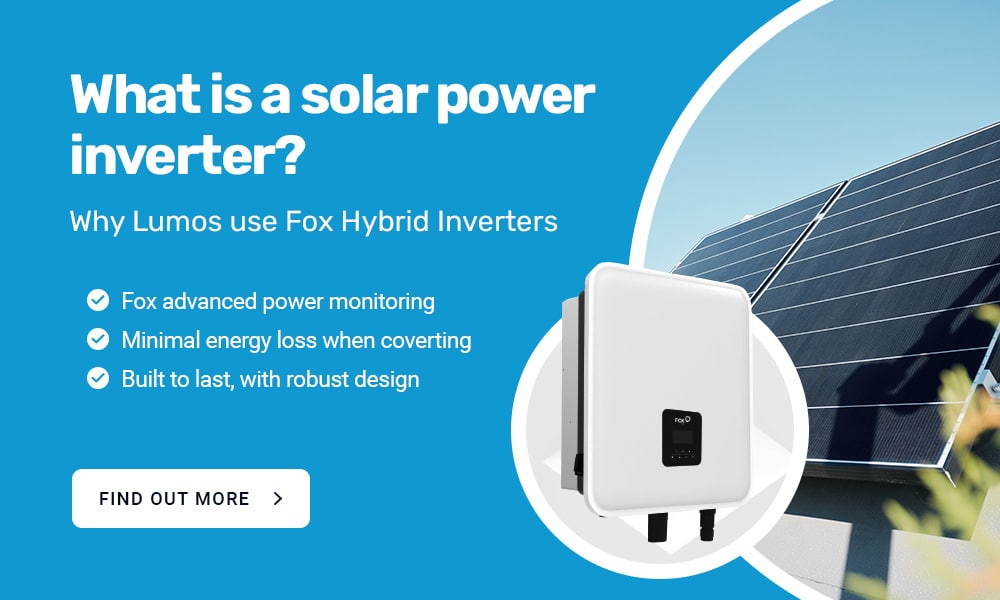
The Fox H3 Pro series is the standout choice for Devon's growing business parks. Its high-voltage architecture allows for seamless scaling from 20kWh to over 100kWh as your operations expand. It has become a favourite for commercial retrofits because it integrates easily with existing solar arrays, providing a cost-effective path to energy independence without a full system overhaul. The modular nature means we can add capacity in small increments, which is ideal for businesses that plan to increase their electric vehicle fleet over several years.
Tesla Powerwall 3 & Beyond: The Integrated Choice
Tesla's 2026 commercial offerings are ideal for retail units and modern office blocks. The Tesla Powerwall 3 installation in Devon excels when integrated with an existing EV fleet, allowing for smart charging that pulls from the battery rather than the grid during peak times. For businesses along the Devon coast, the Storm Watch feature provides an extra layer of security by automatically charging the battery to maximum capacity when the Met Office issues severe weather warnings. It's a reliable, "set and forget" solution for businesses that value a unified software ecosystem.
SolarEdge & Sunsynk: High-Performance Industrial Cabinets
Large-scale industrial sites require the robustness of liquid-cooled battery cabinets. SolarEdge and Sunsynk lead this category with systems designed for high-intensity use. These units work in tandem with SolarEdge optimisers to mitigate shading issues and maximise site efficiency across large roof spaces. Safety is a core focus in 2026; these industrial cabinets feature AI-driven thermal monitoring and aerosol fire suppression as standard.
Understanding Why Commercial Battery Storage is Essential for the UK's transition to a flexible energy grid reinforces the need for high-performance commercial battery storage UK solutions in industrial settings. These cabinets are built to withstand the rigours of 24/7 manufacturing environments while providing the rapid response times required for grid frequency response contracts.

Calculating ROI and Financial Incentives for Devon-Based Commercial Storage
Moving into 2026, the financial case for commercial battery storage uk has reached a definitive tipping point. Businesses across the South West now see payback periods compress to a standard window of 5 to 8 years. This acceleration is driven by the maturity of Lithium Iron Phosphate technology and the widening gap between peak and off-peak energy pricing. Investing in storage isn't just about carbon reduction; it's a strategic move to lock in energy price certainty for the next decade.
Tax efficiency plays a massive role in these calculations. The "Full Expensing" capital allowance, made permanent in the 2023 Autumn Statement, allows companies to deduct 100% of the investment cost from taxable profits in the year of purchase. For a Devon-based manufacturer, this represents a 25p tax saving for every £1 spent. While VAT rules for energy saving materials shifted in February 2024 to include standalone battery installations at 0%, commercial entities usually manage VAT through standard recovery processes. We ensure your project is structured to maximise these fiscal advantages from day one.
Local support adds another layer of financial viability. In cities like Exeter and Plymouth, businesses can often access regional decarbonisation funds or "Net Zero" grants that provide up to £25,000 for infrastructure upgrades. These schemes evolve quickly, but our team tracks the latest availability through the Heart of the South West Local Enterprise Partnership to ensure no funding is left on the table.
The Payback Equation: Savings vs. Earnings
Direct savings are the foundation of your ROI. By charging during low-tariff windows and discharging during peak periods, firms can reduce their import costs by up to 70%. Beyond simple arbitrage, your system becomes a revenue generator through the Smart Export Guarantee and grid services. National Grid pays businesses to provide frequency response, helping to balance the local network. We use precise modelling to account for battery degradation, typically ensuring your cells retain 80% capacity after 3,500 cycles, which protects your long-term earnings potential.
Planning and Permissions in the South West
You'll find that many smaller systems fall under Permitted Development, but larger containerised units often require formal planning permission from local authorities. The most critical step is the G99 application with National Grid. This technical hurdle ensures your commercial battery storage uk installation safely interacts with the local grid. For businesses operating within Dartmoor or Exmoor National Parks, we design bespoke enclosures that meet strict aesthetic conservation standards. Our experience with local planners ensures your transition to energy independence is smooth and compliant.
Implementing a Bespoke Energy Strategy with Lumos Solar in Exeter
Lumos Solar transforms how Devon businesses manage power through a rigorous, data-led approach. We don't rely on estimates or generic templates. Instead, our engineers conduct exhaustive site surveys that capture the unique electrical fingerprint of your facility. This precision is vital because commercial battery storage uk systems only deliver maximum ROI when they're sized to match specific load profiles. Based at our headquarters near Matford Business Park, our team manages the complex logistics of large scale hardware deliveries across Exeter with ease. We understand the access constraints of local industrial estates, ensuring that heavy battery units arrive and are positioned without disrupting your daily operations.
Our strategy extends beyond simple storage. We create integrated ecosystems by pairing battery arrays with Zappi EV chargers, allowing your fleet to run on harvested sunlight even after the sun sets. Every installation adheres to strict MCS standards, providing the technical assurance required for insurance and corporate compliance. We also provide long term Operation and Maintenance (O&M) packages. These programmes include 48 hour response times and annual system health checks to ensure your hardware performs at peak efficiency for its entire 15 to 20 year lifespan.
From Design to Commissioning: Our Local Process
We begin by modelling your 12 month energy profile using half hourly billing data. This allows us to simulate how a battery would have performed against your historical usage, proving the financial case before you commit. For businesses in Newton Abbot, Torquay, and Barnstaple, we typically target a four to six week timeline from the final design approval to the system going live. Once commissioned, your system is linked to our Exeter technical centre. We provide real time monitoring that alerts our team to any performance dips, often resolving software optimisations remotely before you even notice a change in output.
Your Path to Energy Independence
The transition to a smarter grid starts with a professional commercial energy audit. This foundational step identifies exactly where your wastage occurs and how much capacity you truly need. Choosing a local solar power firm is a strategic advantage when dealing with District Network Operators (DNOs). We have established relationships with National Grid technicians across the South West, which often leads to faster grid connection approvals for commercial battery storage uk projects. We handle the entire G99 application process, removing the administrative burden from your management team. Take control of your overheads and secure your 2026 energy budget now.
Request your bespoke commercial storage quote today and join the growing number of Devon enterprises achieving true energy resilience.
Securing Your Energy Independence Across Devon and Somerset
By 2026, the shift toward decentralised power will be the defining factor for competitive South West firms. Implementing commercial battery storage uk allows your business to bypass peak tariff rates while generating new revenue streams through grid balancing services. It's a proven method to turn a volatile overhead into a predictable asset. Our internal performance modelling suggests that Devon based firms can reduce peak energy expenditure by up to 40% by integrating bespoke storage solutions into their 2026 infrastructure plans.
As MCS Accredited Installers and official partners for Tesla and Fox ESS, Lumos Solar brings elite technical proficiency to every project. Our Exeter-based technical support team is ready to help you navigate the complexities of ROI calculations and the specific financial incentives available throughout 2026. We don't believe in one-size-fits-all solutions; we focus on precision engineering that meets your specific operational demands. Taking control of your energy future starts with a detailed understanding of your site's unique potential. For property owners across the region, our comprehensive guide to solar battery storage in Exeter provides an excellent starting point for understanding how these technologies work across both residential and commercial settings.
Book Your Bespoke Commercial Energy Audit with Lumos Solar
We're excited to help your business lead the transition toward a cleaner, more profitable era of energy management.
Frequently Asked Questions
How much does a commercial battery storage system cost in the UK in 2026?
A standard commercial battery storage uk system in 2026 costs between £450 and £750 per kWh of installed capacity. For a typical Devon SME requiring a 60kWh setup, you should budget approximately £35,000 for a fully commissioned installation. These figures include high-efficiency inverters and smart energy management software. Prices have stabilised since 2024 as supply chains matured, making the return on investment clearer for Somerset businesses.
Can my Devon business use battery storage without solar panels?
Your Devon business can absolutely benefit from battery storage without having solar panels installed. This strategy, known as energy arbitrage, involves charging the batteries during off-peak windows when rates drop below 10p per kWh. You then discharge the stored energy during peak daytime hours when grid prices often exceed 30p per kWh. It's a proven method for reducing annual electricity expenditure by 25% without needing roof space for photovoltaics.
How long do commercial lithium-ion batteries typically last?
Commercial lithium-ion batteries typically last between 10 and 15 years depending on their daily throughput. Most Tier 1 manufacturers, such as Tesla or GivEnergy, guarantee their cells for 6,000 to 8,000 cycles at 90% depth of discharge. You'll likely see the system maintain at least 80% of its original capacity after a decade of service. We design bespoke systems to ensure thermal management stays optimal, which protects your long-term investment.
Do I need a G99 application for a battery installation in the South West?
You must submit a G99 application for any battery installation in the South West that exceeds 3.68kW per phase. This process notifies National Grid Electricity Distribution (NGED) about the potential impact on the local network. Our team handles these technical submissions directly, as approval can take 45 to 60 days for larger commercial sites. It's a critical step to ensure your system is legally compliant and safely synchronised with the regional grid.
What is the difference between high-voltage and low-voltage commercial batteries?
High-voltage commercial batteries operate between 200V and 800V, while low-voltage systems typically run at 48V. High-voltage setups are the standard for commercial battery storage uk projects because they offer superior round-trip efficiency and faster discharge rates. This makes them ideal for businesses with high-draw machinery or EV charging hubs. Low-voltage options are generally reserved for smaller, modular residential-scale applications where demand is lower and more consistent.
Is planning permission required for outdoor battery cabinets in Exeter?
Planning permission isn't usually required for outdoor battery cabinets in Exeter if they fall under Permitted Development rights for non-domestic extensions. Specifically, structures under 3 metres in height and 5 metres from the boundary often bypass formal applications. However, if your business is located within the Exeter Central Conservation Area or near a Grade II listed building, you'll need a full application. We always verify local planning constraints before any hardware arrives on site.
How much space does a 100kWh commercial battery system require?
A 100kWh commercial battery system requires approximately 1.5 to 2 square metres of floor space. This footprint typically accommodates two vertical cabinets, each standing about 2 metres tall. You must also factor in a 600mm clearance zone around the units for ventilation and maintenance access. Modern modular designs allow us to stack units or place them outdoors in weatherproof enclosures, providing flexibility for Somerset sites with limited indoor capacity.
Can battery storage protect my business during a total grid blackout?
Battery storage can protect your business during a total grid blackout if the system includes an Emergency Power Supply (EPS) gateway. This hardware allows the system to island itself from the grid, providing near-instantaneous backup power to your critical circuits. Most commercial-grade inverters switch to battery power in less than 20 milliseconds, which is fast enough to keep servers and security systems running. It's an essential feature for Devon firms requiring 100% uptime.